
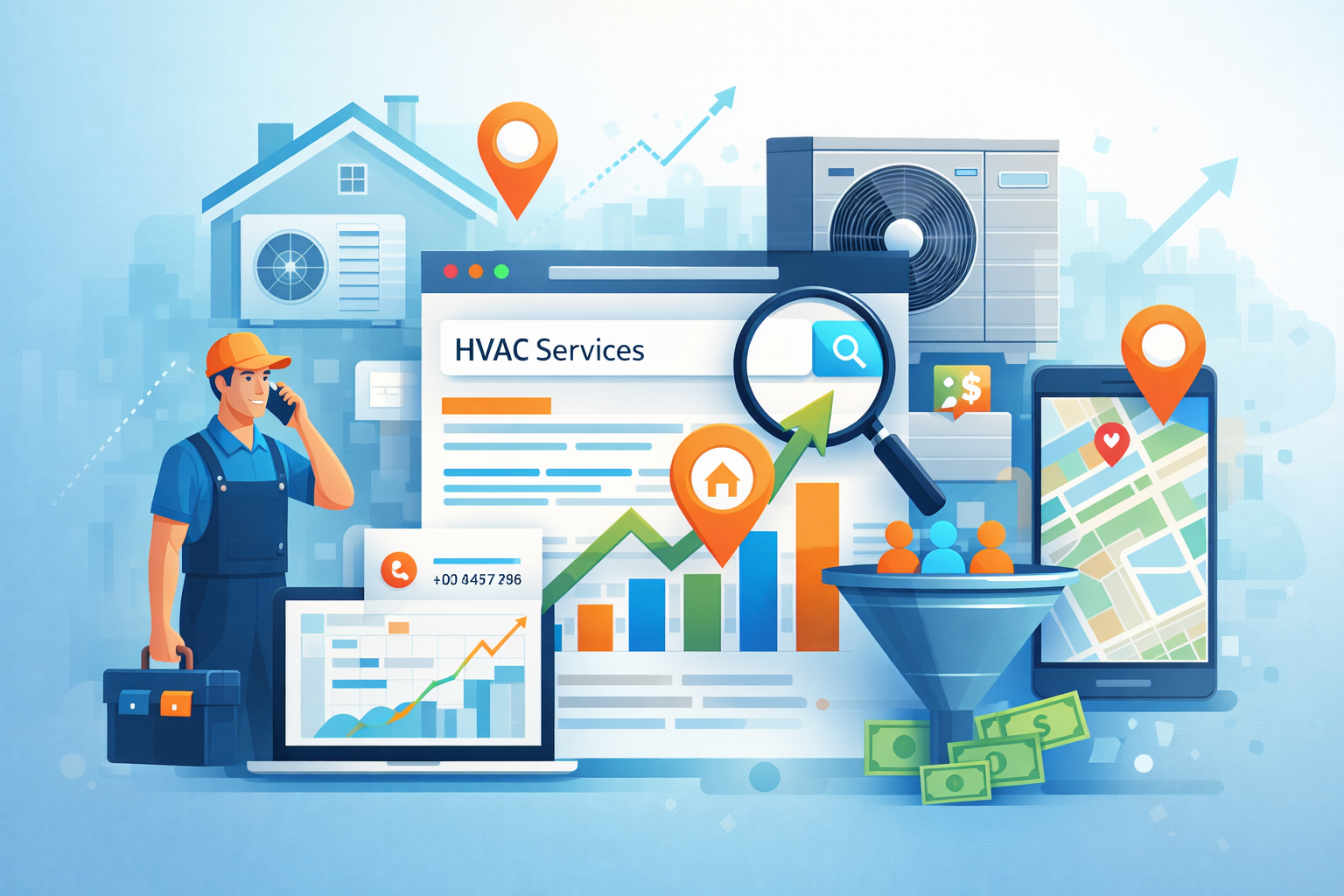
Why SEO is Essential for HVAC Lead Generation
In the competitive world of HVAC services, simply having a website is not enough. To stand out, businesses need to leverage SEO (Search Engine Optimization) to ensure they appear in front of potential customers when they search for HVAC services.
With most customers now searching online for installation, maintenance, and repair services, HVAC SEO is a powerful tool for boosting local visibility, improving rankings, and driving more qualified leads.
As we move further into 2026, the search landscape continues to evolve, with mobile search and local SEO being more crucial than ever. This guide will show HVAC businesses how to use SEO to capture high-intent traffic, engage local customers, and turn web visitors into booked appointments.
How HVAC Customers Search Online Today (Data & Trends)
More than 97% of consumers search online to find local services, and 78% of mobile local searches lead to an offline purchase within 24 hours. These statistics highlight why focusing on local SEO is crucial for HVAC companies. When someone searches for “HVAC repair near me” or “emergency AC service in [City]”, the goal is to ensure your business is the first one they see.
Consumers are no longer just browsing for information, they are looking to hire a service provider. That’s where HVAC SEO comes into play. By optimizing your website and local business profiles, you ensure that you appear on search engines when potential customers are actively looking to make a decision.
High‑intent searches, queries like “AC repair in [City]” or “Furnace maintenance near me”, bring the most qualified leads. These users are likely ready to book services, making them an essential audience to target.
Understanding HVAC SEO: What It Is & How It Works
SEO for HVAC businesses isn’t just about ranking for generic terms like “HVAC services.” It’s about targeting the right keywords, those that align with local search intent and drive high-quality traffic to your site. From on‑page optimization to local SEO, technical SEO, and conversion optimization, each aspect of SEO plays a role in increasing visibility and generating leads.
At Austin Bryant Consulting, we help HVAC businesses improve their online presence by implementing strategies that focus on both search engine rankings and conversion optimization. With local SEO specifically tailored to the HVAC industry, you can ensure your business appears when it matters most: when a potential customer is ready to call or book a service.
Key Local SEO Tactics That Drive HVAC Leads
Local SEO is at the core of an effective HVAC SEO strategy. Since most HVAC businesses operate in specific geographic regions, targeting local keywords and optimizing for local search can significantly improve your visibility.
1. Optimize Your Google Business Profile (GBP)
Your Google Business Profile (GBP) is often the first place potential customers will encounter your business, especially in local searches. Optimizing your GBP is crucial for increasing visibility in Google’s Local Pack, where most local service calls originate.
- Make sure your NAP (Name, Address, Phone) details are accurate.
- Add service areas and relevant business categories.
- Use high‑quality photos to show your team, vehicles, and past projects.
- Ensure your contact info and business hours are correct and up-to-date.
An optimized GBP will help improve local rankings and drive more calls directly from search results.
2. Target Local & Transactional Keywords
To ensure your HVAC business ranks for relevant search queries, you need to focus on local and transactional keywords. Think about the terms your customers are using when they’re actively looking for services:
- “HVAC installation in [City]”
- “Emergency furnace repair near me”
- “AC maintenance in [City]”
At Austin Bryant Consulting, we work with HVAC businesses to identify high-value keywords that bring in qualified leads. By optimizing your website with these keywords, you increase your chances of appearing when a potential customer is ready to book a service.
Additionally, creating dedicated location-specific pages for each of your service areas ensures that you can target multiple local markets effectively.
3. Build Local Backlinks & Citations
Build, improve your HVAC SEO and increase your domain authority. Local backlinks come from community websites, business directories, and industry-related listings that are important for ranking in local search results.
Some proven methods include:
- Listing your business on local directories like Yelp, Angi, and your Chamber of Commerce website.
- Partnering with complementary local businesses, such as plumbing or electrical companies, to exchange backlinks.
- Sponsoring local events to gain mentions and backlinks on community sites.
These strategies signal to search engines that your business is a trusted, local authority in the HVAC industry, boosting your local rankings.
4. Create Location-Specific Service Pages
For HVAC businesses that serve multiple cities or regions, location-specific service pages can greatly expand your reach. Each page should target relevant local keywords, such as “HVAC repair in Austin” or “AC installation in Dallas”.
By creating unique, geo-targeted content, you increase the likelihood of appearing in search results when users search for services specific to their location. This localized approach allows you to rank for multiple cities or regions, driving more organic traffic and increasing your chances of converting visitors into leads.
5. Encourage and Manage Online Reviews
Online reviews are one of the most important ranking factors for local SEO. More positive reviews signal to search engines and potential customers that your business is trustworthy and reliable. Encouraging satisfied customers to leave reviews can help you rank higher in search results and improve conversion rates.
To leverage this, ask customers for reviews after completing a service, and make it easy for them to leave feedback by sending them direct links to review platforms like Google and Yelp.
Technical SEO & Website Optimization for HVAC
While local SEO tactics are essential for visibility, technical SEO ensures that your website performs well for both users and search engines. This includes optimizing your site’s mobile design, page speed, and CTAs (calls to action).
Mobile Optimization: Since a significant portion of searches are done via mobile, your website must be mobile-friendly.
Page Speed: Slow websites frustrate users and hurt rankings. Use tools like Google PageSpeed Insights to identify areas for improvement.
Trust Signals: Display customer testimonials, showcase industry certifications, and make booking services easy and visible.
Content Marketing: Educating Leads & Boosting Rankings
Creating valuable content for your audience not only boosts your SEO but also builds trust with potential customers. Some content ideas for HVAC businesses include:
How‑to guides: “How to Choose the Best HVAC System for Your Home”
Maintenance tips: “How to Maintain Your HVAC System During Summer”
Service explainers: “What to Expect During a Furnace Tune-Up”
By publishing high-quality content that answers common customer questions, you increase your chances of appearing in rich snippets and feature boxes, boosting visibility and positioning yourself as an industry leader.
Conversion Optimization: Turning Traffic into Leads
Once you attract traffic through SEO, the next step is converting that traffic into leads. Some strategies to optimize your website for conversions include:
Clear CTAs (Call to Actions) like “Get a Quote” or “Schedule a Service” on every page.
On‑site booking forms that make it easy for customers to schedule service online.
Live chat features or automated scheduling tools to answer questions quickly.
At Austin Bryant Consulting, we help HVAC businesses optimize their websites for both lead generation and conversion, ensuring your site drives actionable results.
Measuring & Tracking HVAC SEO Performance
To understand how well your HVAC SEO efforts are working, it’s important to track key metrics:
Organic traffic growth: How much traffic is your website getting from search engines?
Keyword rankings: Track your rankings for local and service-based keywords.
Lead generation: Measure calls, contact form submissions, and booking requests.
Click-through rate (CTR): Monitor how often users click on your business in search results.
Tools like Google Analytics, Google Search Console, and local SEO platforms such as BrightLocal can provide the insights you need to refine your strategy and continue improving your HVAC SEO performance.
Start Implementing HVAC SEO Today
In today’s competitive landscape, HVAC SEO is no longer optional, it’s essential for driving long-term leads and sustained business growth. By optimizing your website for local search, targeting the right keywords, and providing excellent content, you’ll ensure your business ranks high on search engines when it matters most.
Start by implementing the SEO strategies outlined in this blog, and you’ll soon see your HVAC business rise above the competition, attracting more qualified leads and building stronger relationships with customers.
Ready to boost your HVAC business’s visibility and generate more leads through SEO? Contact Austin Bryant Consulting today to get started!
Frequently Asked Questions (FAQs)
How can SEO help HVAC businesses generate more leads?
SEO boosts HVAC visibility in local search results, helping you appear when customers search for services like “HVAC repair near me”. This leads to more website traffic and bookings.
What local SEO tactics are key for HVAC companies?
Optimize your Google Business Profile, target local keywords, gather online reviews, and build local backlinks to improve your rankings and attract nearby customers.
How do I optimize my HVAC website for local search?
Use local keywords, create location-specific pages, ensure mobile optimization, and add structured data to improve search rankings and attract local traffic.
Why are reviews important for HVAC SEO?
Reviews boost local rankings and build trust. Positive reviews signal to search engines and customers that your HVAC business is reliable.
What should my HVAC website include to convert visitors?
Include clear CTAs (like “Request a Quote”), easy contact options, booking forms, and trust signals like reviews to encourage visitors to become leads.

Keith Hunn is the founder of Austin Bryant Consulting, dedicated to sharing his expertise and insights on various topics. With a passion for knowledge and a commitment to quality content, Keith strives to provide valuable information to his readers through every blog post.